Before anything else, a correction that reframes the whole story: there is no such thing as "24Gbps GDDR7" from Samsung. The number 24 in the company's headline graphics memory product refers to 24 gigabits of capacity — 3GB per chip — not 24 gigabits per second of signaling speed. Capacity and bandwidth solve different problems, and collapsing the two produces a spec sheet describing a part nobody manufactures. The real story is more interesting than the mistake, and it ends somewhere unexpected: with one of the most anticipated graphics card refreshes in years quietly falling apart.
What Samsung actually developed
On October 17, 2024, Samsung announced the industry's first 24Gb GDDR7 DRAM, built on fifth-generation 10nm-class process technology. The engineering achievement is density: Samsung increased cell density by 50% while keeping the same physical package size as the 16Gb predecessor. A board designer can drop the denser chip into an existing footprint and get half again as much memory without redesigning the card.
On speed, Samsung claimed over 40Gbps — roughly a 25% improvement over the prior generation — with performance reaching up to 42.5Gbps depending on the operating environment. That last qualifier is doing real work, and we will come back to it.
Power efficiency improved by more than 30%, which Samsung attributed to clock control management and a dual VDD design, techniques borrowed from its mobile memory products and applied to graphics DRAM. Power gating limits current leakage during high-speed operation.
"After developing the industry's first 16Gb GDDR7 last year, Samsung has reinforced its leadership in graphics DRAM," said YongCheol Bae, Executive Vice President of Memory Product Planning at Samsung Electronics.
Notably, Samsung framed the part around data centers and AI workstations first, with graphics cards, gaming consoles, and autonomous driving systems following. Graphics memory is no longer only for graphics.
What GDDR7 is at the standard level
GDDR7 is not a Samsung invention but a JEDEC standard, published as JESD239 in March 2024 with participation from AMD, Micron, NVIDIA, Samsung, and SK hynix. It specifies up to 192 GB/s of bandwidth per device, double GDDR6.
The headline change is signaling. GDDR7 is the first JEDEC standard DRAM to use pulse amplitude modulation. PAM3 encodes three voltage levels (+1, 0, -1) to move 3 bits over 2 cycles, where traditional NRZ signaling moves 2 bits over the same 2 cycles. That is a 50% gain in data per cycle without raising the clock, which is why GDDR7 improves signal-to-noise ratio and energy efficiency rather than simply burning more power for more speed.
The standard also doubles independent channels from two to four, supports densities from 16Gb to 32Gb, and adds a data integrity feature set that graphics memory historically lacked: on-die ECC with real-time reporting, data poison, error check and scrub, and command address parity with command blocking.
"GDDR7 is the first GDDR that addresses market needs for RAS by incorporating data integrity features," said Michael Litt, JEDEC GDDR Subcommittee Chair. That addition is aimed squarely at customers running these chips in compute and AI workloads, where a silently corrupted bit matters far more than it does in a rendered frame.
The gap between developed and shipping
Samsung announced the 24Gb part in October 2024 and began mass production roughly a year later, in late November 2025. Here is the detail that gets lost in most coverage: the part entering volume production runs at 28Gbps, not 40Gbps. Faster 32Gbps and 36Gbps variants entered sampling, meaning they are with customers for qualification rather than shipping in products.
The 40Gbps and 42.5Gbps figures describe what the design can achieve under favorable conditions, not what is in your graphics card. Treating a development milestone as a shipping specification is exactly the error that produces fictional benchmark tables. For 2026 hardware, 28Gbps is the honest number.
Why 3GB chips matter more than the speed
Graphics card memory capacity is a function of bus width and chip density, and bus width is expensive to widen. A 256-bit memory bus accommodates eight 32-bit memory devices. With 2GB chips, that is 16GB of VRAM. Swap in 3GB chips and the same bus, the same board layout, and the same chip count yield 24GB. A 192-bit card moves from 12GB to 18GB.
That is why 24Gb GDDR7 generated so much anticipation. It offered a 50% VRAM increase without a wider bus, without clamshell configurations mounting chips on both sides of the board, and without a new GPU die. For workloads bounded by memory capacity rather than memory speed — large local AI models, high-resolution texture sets, professional content creation — capacity is the constraint that actually binds.
The refresh that did not happen
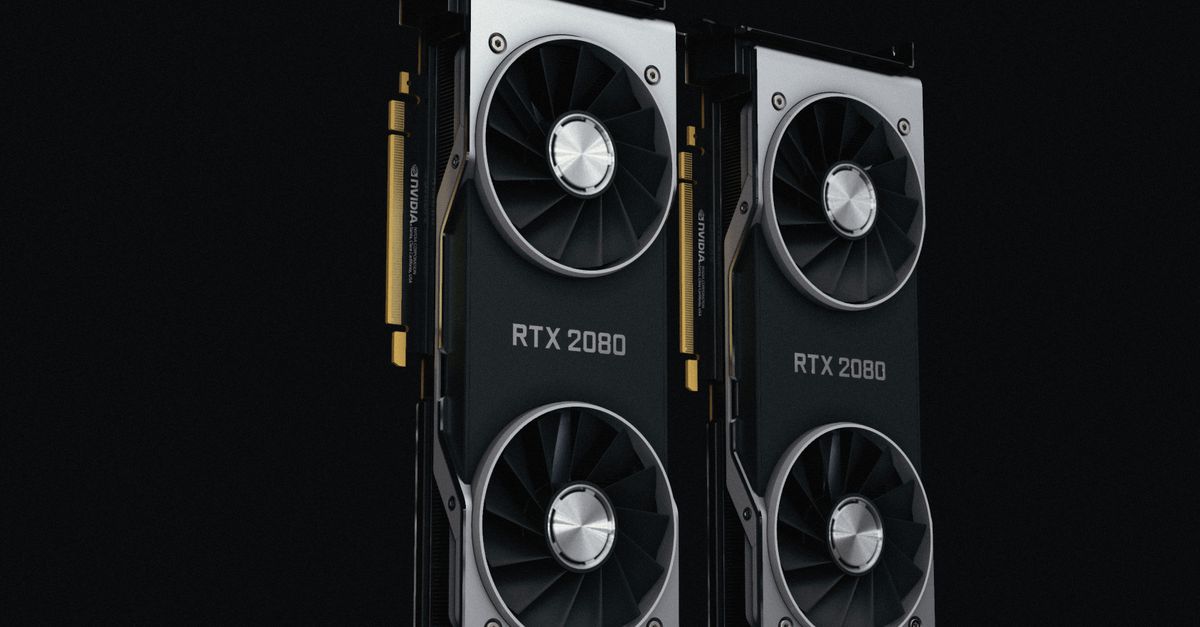
NVIDIA's RTX 50 Super series was built around exactly this premise: an RTX 5070 Super at 18GB, an RTX 5070 Ti Super at 24GB, and an RTX 5080 Super at 24GB, all enabled by 3GB modules. Supply chain reports indicated cards had already reached board partners.
Then, in January 2026, the refresh was reported as delayed indefinitely, with NVIDIA informing its partners. The reasons cited were rising VRAM costs, AI infrastructure buyers outbidding consumer hardware for memory supply, an expected shortage measured in years rather than months, and limited competitive pressure from AMD. Supply chain chatter has put 3GB GDDR7 modules at roughly triple the cost of 2GB parts, though those figures come from unofficial channels, and NVIDIA has not confirmed pricing or a revised launch window.
The lesson is that a memory technology working as designed is not sufficient. Samsung solved the density problem. The economics of who gets to buy the output remained unsolved.
Where the competition stands
- Samsung — 24Gb at 28Gbps in mass production, 32Gbps and 36Gbps sampling, and 40Gbps-class speeds demonstrated but not shipping in volume
- SK hynix — has confirmed 3GB GDDR7 modules, with rated speeds above Samsung's production part and public roadmaps pointing higher still
- Micron — 24Gb parts now listed in its catalog, with a production-status grade at 28 GT/s and a faster grade in sampling
All three major DRAM makers now compete in the 3GB segment. Under normal conditions that many suppliers entering a segment signals falling prices. The AI buildout has inverted that expectation for the time being.
What to watch
Three questions determine whether high-capacity GDDR7 reaches mainstream graphics cards: whether the 32Gbps and 36Gbps 24Gb parts graduate from sampling to volume production, whether graphics memory pricing normalizes as new fabrication capacity comes online, and whether HBM production for AI accelerators keeps absorbing the wafer capacity that graphics DRAM competes for.
The silicon is proven and shipping. Whether it arrives at a price a consumer graphics card can absorb is the question that has no announcement date attached to it.