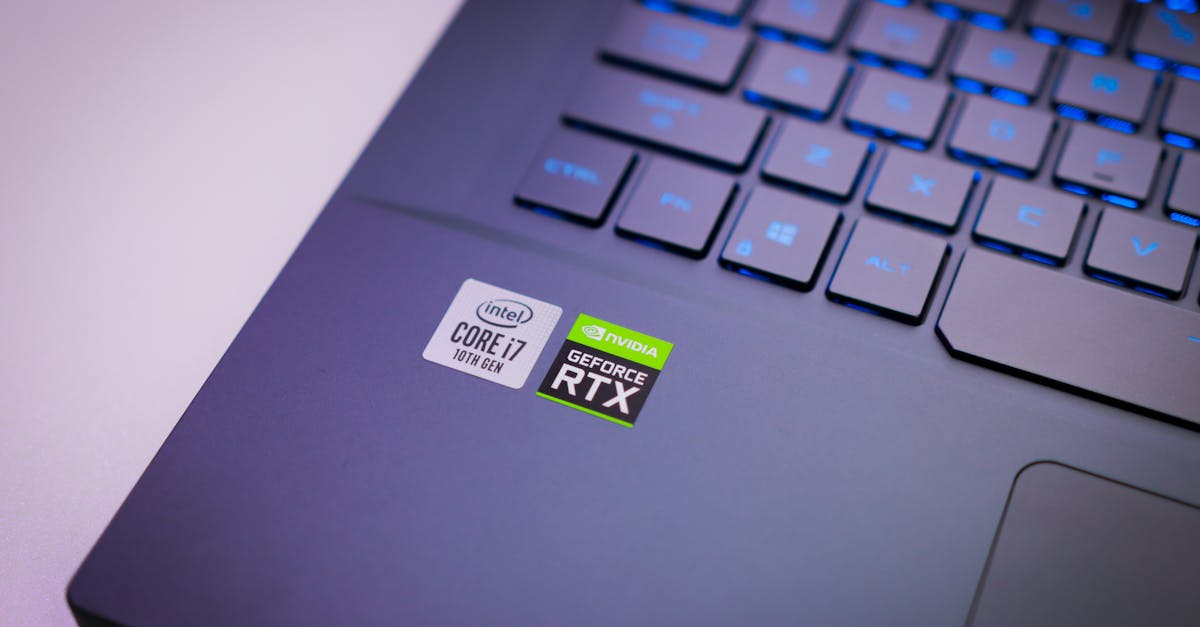
A widely circulated spec sheet describing a Razer Blade 16 that pairs an NVIDIA GeForce RTX 4070 with a 16-inch 4K display does not match any machine Razer has ever sold. The two halves of that configuration are real, but they were never sold together, and the 4K-class panel involved was not a conventional 4K screen at all. Here is what Razer actually shipped, and what the Blade 16 looks like today.
The RTX 4070 Blade 16 existed — but it was never 4K
Razer did sell Blade 16 configurations built around the RTX 4070 Laptop GPU across two generations. The 2023 version paired the 4070 with Intel's Core i9-13950HX, a 24-core Raptor Lake HX part. The 2024 refresh moved to the Core i9-14900HX. Both were legitimate mid-tier options in a lineup that also offered RTX 4060, 4080, and 4090 silicon.
What those 4070 machines did not have was a 4K screen. They shipped with a 16-inch QHD+ panel at 2560 x 1600 and a 240 Hz refresh rate — IPS in 2023, upgraded to a Samsung OLED panel for 2024. That resolution is the recurring detail the bogus spec sheet gets wrong, and it matters, because 2560 x 1600 is roughly 4.1 million pixels against 4K's 8.3 million. Any performance expectation built on the wrong number is off by a factor of two in rendering load.
The high-resolution option was mini-LED, and it was a different machine
The Blade 16 did offer a genuinely high-resolution display in 2023 and 2024, and it is almost certainly the source of the confusion. Razer built a dual-mode mini-LED panel that switched between a native 3840 x 2400 mode at 120 Hz and a native 1920 x 1200 mode at 240 Hz. The higher mode is UHD+ — 4K-class in pixel count, but at a 16:10 aspect ratio rather than the 16:9 shape most people mean by "4K."
That panel was the premium option, positioned above the QHD+ screen and sold at a higher price. Reviewers at the time noted the practical reason the pairing with a 4070 made little sense: driving modern titles at 3840 x 2400 asks considerably more of a GPU than the 4070 Laptop chip comfortably delivers, which is why the dual-mode display was steered toward higher-tier configurations. Razer has since retired the dual-mode mini-LED entirely. Every Blade 16 built from 2025 onward uses a QHD+ OLED panel, and no 4K option is offered at any GPU tier.
What the Blade 16 actually is in 2026
The current machine is the 2026 Blade 16, announced in March and now sold through Razer's webstore, RazerStore locations, and select retailers. It is a substantially different laptop from the RTX 40-series models, and notably it drops the AMD Ryzen AI 9 HX 370 that powered the 2025 revision in favor of Intel silicon again.
Display
Per Razer's product announcement, the 2026 model uses a 16-inch QHD+ (2560 x 1600) OLED running at 240 Hz with a 0.2 ms response time. Razer raised peak brightness by 100 nits over the previous generation to meet VESA DisplayHDR TrueBlack 1000 certification, reaching up to 1,100 nits in HDR mode and around 500 nits in SDR. The panel covers 100% of DCI-P3 and ships Calman Verified. Still no 4K, and still no mini-LED.
Processor and graphics
- CPU: Intel Core Ultra 9 processor 386H — 16 cores, up to 4.9 GHz max turbo, a 33% core-count increase over the previous Blade 16
- NPU: up to 50 TOPS of on-device AI acceleration, qualifying the machine as a Copilot+ PC
- GPU: NVIDIA GeForce RTX 50 Series Laptop GPUs, with the top tiers rated up to 165W TGP — an increase from the 160W ceiling on the 2025 model
- Memory: up to 64 GB of LPDDR5X-9600, soldered and not user-upgradeable
Retail listings place the RTX 5070 Ti (12 GB GDDR7), RTX 5080 (16 GB GDDR7), and RTX 5090 (24 GB GDDR7) across the lineup. Razer's own Blade 16 product page foregrounds the 5080 and 5090 configurations.
Chassis and connectivity
- 14.9 mm thick, approximately 2.14 kg (4.71 lbs), precision-milled T6-grade aluminum unibody with recycled content
- Thunderbolt 5 (up to 120 Gbps downstream with Bandwidth Boost, 80 Gbps bi-directional in normal operation) plus a Thunderbolt 4 port
- Three USB 3.2 Gen 2 Type-A ports, full-size HDMI 2.1, UHS-II SD card reader
- Wi-Fi 7 and Bluetooth 6.0 — both absent from the AMD-based 2025 model
- Six-speaker array with four tweeters and two subwoofers, THX Spatial Audio+
Battery life is the headline change
Razer's own figures claim up to 13 hours of productivity use and up to 15 hours of video playback, with the company disclosing its test conditions: Modern Office workloads via PCMark 10, 45% display brightness, keyboard lighting off, the display dropped to 60 Hz, Intel Power Saver enabled, and Synapse set to Battery Saver. Those are favorable settings, and vendor battery claims should be read with that in mind.
Independent testing has been broadly supportive. Tom's Hardware measured 12 hours 46 minutes of non-gaming runtime from the 90 WHr battery, beating the Ryzen AI 9 HX 370 Blade 16 by more than five hours and an Alienware 16 Area-51 by more than nine. Notebookcheck framed the generational efficiency gain in similar terms. The same Tom's Hardware review was less impressed elsewhere, flagging multi-threaded CPU performance that trails competing systems and the absence of a haptic trackpad at this price. These are third-party results, not measurements taken by this publication.
Pricing, and how to sanity-check a spec sheet
Razer's press release did not disclose pricing. Retail and store listings put the 2026 Blade 16 lineup starting at $3,499.99 and running past $5,000 for maxed-out RTX 5090 configurations with 64 GB of memory and larger SSDs. Exact figures vary by retailer and region, so confirm against the configurator before ordering.
The practical lesson from the RTX 4070 4K claim is that GPU tier and panel tier are linked in vendor lineups, and a mismatch between them is a reliable signal that a spec sheet is fabricated or garbled. Manufacturers do not typically pair a mid-range mobile GPU with their most demanding display, because the combination produces a machine that cannot drive its own screen well. When a listed configuration looks unusually generous for its price, the manufacturer's own product page and support documentation remain the authoritative check.